
Low sun over calm water, seen through the thin horizontal cables and slim stainless posts of a deck railing.

AGS Stainless and Dr. Decks

She saw it on Instagram. Then she asked for it by name.

A homeowner following Dr. Decks watched him build the award-winning “Kiki” deck, then arrived at her own project with the railing already chosen — the Clearview® Rainier cable railing system from AGS Stainless. Second year running the Master Deck Builder has picked it.

How this project started

In 2025, Dr. Decks — Jason Russell — entered a waterfront deck called “Kiki” in the National Deck Competition run by NADRA. It took First Place and Overall Winner.

Jason’s submittal this year was the best deck project ever entered into this competition.
— One of the competition judges

It was earned on a deck wearing a Rainier cable rail system.

A homeowner watched that deck go up post by post and kept coming back to the railing. She contacted Jason and told him she wanted the same system for her deck. Jason encouraged her to visit the AGS factory to see product samples and watch how the railing is built. What she saw and learned about the process of custom railing fabrication convinced her that she wanted AGS Stainless to build her railing system.

She did not choose AGS because someone sold her. She convinced herself, by seeing the product and comparing it to other railing products. As she told Dan Wimmer, one of the AGS estimators: “I’ve looked at a number of railing products at my local lumber yard. Nothing I’ve seen can even come close to your railing products.” She instructed Jason to place the order, he did, and the project began.

What Rainier is

A cable railing system built entirely from 316 stainless steel — the marine-grade alloy used for boat hardware.

Every system is fabricated to one deck’s dimensions and ships as a numbered kit that assembles with a few simple hand tools.

A deck corner at sunset. Thin horizontal cables and slim square posts frame an open view across calm water to a wooded shoreline.
The current Dr. Decks railing project

316Marine-grade stainless
1-1/2 in.Square post
100%Prefabricated to fit
40 yrsRailing is all we do

For builders

All-stainless railing, without the local metal fabricator

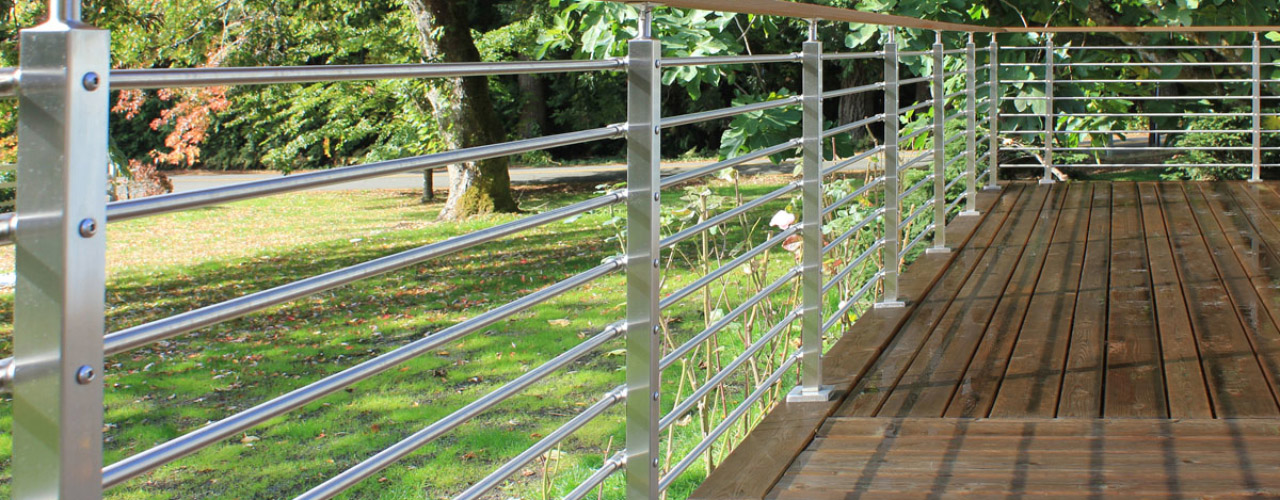
Close-up of two brushed stainless posts. A welded stainless rod passes through one post and cable terminations sit flush in machined holes. Every visible component is the same metal.

Custom gate

Cable railing is what clients ask for now — they have seen it on Instagram and they are requesting it. What they know less about is the type of system AGS builds: one where not just the cable, but the entire railing system, is fabricated from marine-grade stainless steel.

Those projects normally require hiring a local metal fabricator, which significantly increases project cost. Instead of depending on a local metal craftsman, AGS fabricates it for the builder — made to precisely fit the client’s project, then shipped ready to be installed. No fabricator needed.

There is also the paperwork. Your building department wants stamped drawings and engineering calculations before it will issue the permit. AGS supplies both with every system — we provide them, you submit them.

Crews new to installing railing can install our systems on the first job. No past experience, no expertise, no special tools. Changing stair pitch, obtuse corners, fascia mounts, mixed-level transitions? You don’t have to be an expert in railing design, because we are.

For homeowners

You’re not shopping for railing. You’re protecting a view.

Nobody builds a deck because they wanted a railing. You built it for the water, the trees, the greenbelt, the evening light — but an elevated surface has to include safety measures. The solution is railing (technically “guards”).

Most railing solutions pay for that safety with a portion of your view: aluminum post systems run 2-1/2 to 3 in. in diameter and read as bulky, and composite post systems at 4 in. or greater are bulkier still.

What Rainier gives you

  • The view stays yours. 1-1/2 in. posts and thin cables read as a frame, not a screen.
  • Built for weather. 316 stainless throughout — posts, rails, fittings, fasteners — not a coating over a less durable material.
  • Made for your deck, not adapted to it. Custom-designed to fit in with and enhance your home.
  • The permit paperwork is handled. Stamped drawings and engineering calculations come with the system.
  • Your finish, your call: brushed satin stainless, or hundreds of powder-coat colors, applied at the factory.
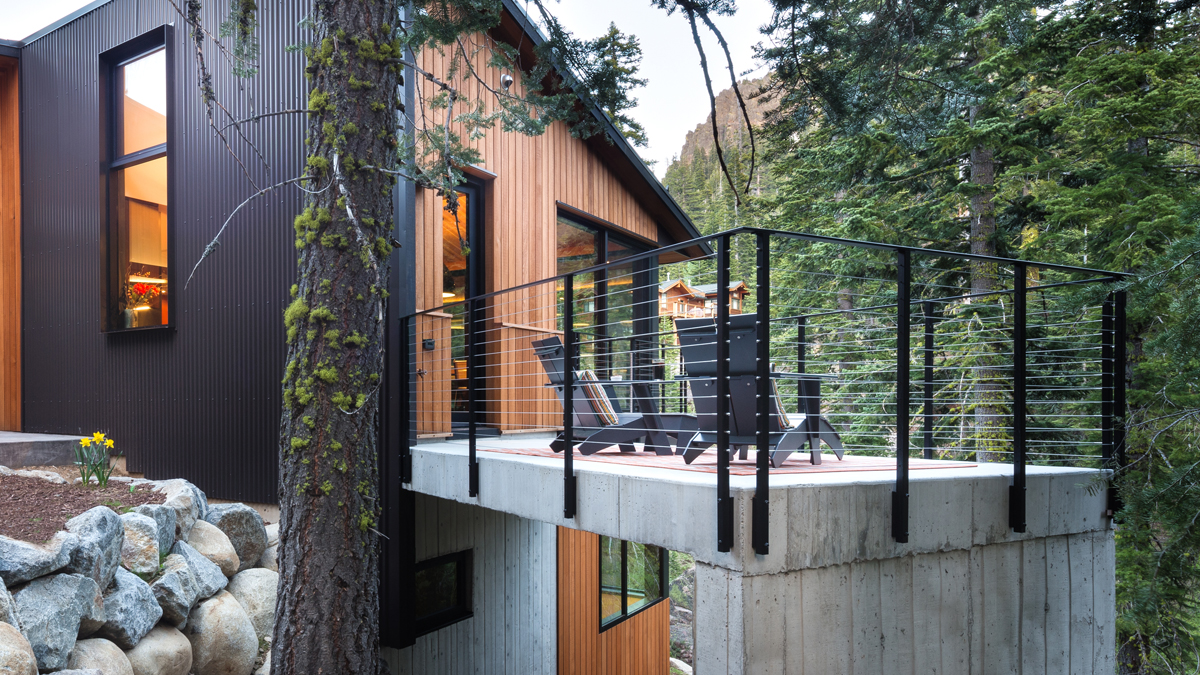
A run of cable railing on a composite deck. The thin cables and narrow posts leave the water, shoreline, and sky almost entirely unobstructed.

The current Dr. Decks railing project

How an order runs

  1. Send us what you have — plans, dimensions, or a hand sketch with rough measurements. Estimates are complimentary.
  2. We create a two-dimensional drawing of the home and the railing.
  3. We send you the final drawing for approval.
  4. We create shop drawings and fabricate. No robots — all of our work is done by hand.
  5. Numbered components ship with easy-to-follow instructions.
  6. Installation takes a few simple hand tools. No onsite adjustments, no field modification.
Lead time?
Four to six weeks from order to shipment. If the schedule can’t absorb that, ask about Cascadia — ships within a couple of days.
Specialty subcontractor?
Not needed. Nothing is cut, welded, ground, or polished on site.
Inspection?
Stamped drawings and engineering calculations are delivered to you to present to the agency having jurisdiction.
Is there a builder program?
Yes. Contact us for details.
More expensive than aluminum?
Yes. Dr. Decks answers this with a hashtag: #buyoncecryonce. 316 stainless is what you install when you do not intend to do this again.
Can my contractor install it?
Yes — no metalworking skills are required.
Salt water?
That is what 316 stainless (marine-grade) is for.
Can I do it myself?
Yes. Numbered parts, written instructions — if you can use simple hand tools, you can install our railing.
Can I see it first?
Ask for samples, or call ahead and we will schedule a factory tour. That is what decided the homeowner on this project.

316 stainless vs. powder-coated aluminum

In a high-impact exterior application — salt water, heavy industry, pools — aluminum is not a very noble metal.

Where aluminum is in contact with stainless steel and moisture is present, the aluminum begins to degrade. This is galvanic corrosion: the corrosion that results when dissimilar metals are joined.

Stainless steel cable is currently the fastest-growing infill material in the market, and most cable rail systems are built on aluminum posts. Homeowners buying one of those systems should know that it carries a greater risk of corrosion than an all-stainless railing system.

Which type of stainless should I choose?

Although there are numerous types of stainless steel available, the two most common for railing are 304 and 316. Historically, 316 marine-grade stainless requires less maintenance than 304.

In a high-impact area, all stainless grades will require some periodic cleaning to maintain their as-new appearance. Acknowledging that, 316 offers the best overall value proposition — and AGS uses 316 for all of its railing components: posts, top rail, fittings, fasteners, and hardware.

Four systems, one material standard

Rainier

Used on the Kiki project. 1-1/2 in. posts, thin cable infill, maximum sightline.

Olympus

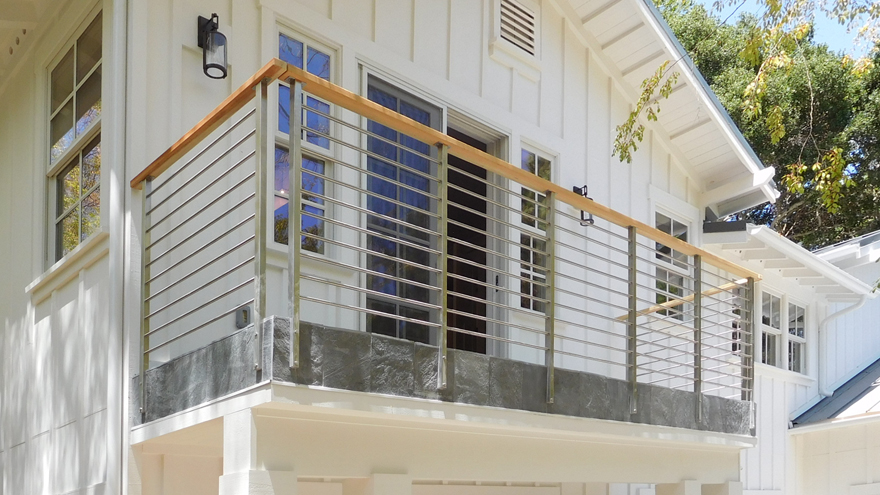
Rod rail system. Custom designed and 100% prefabricated.

Glacier

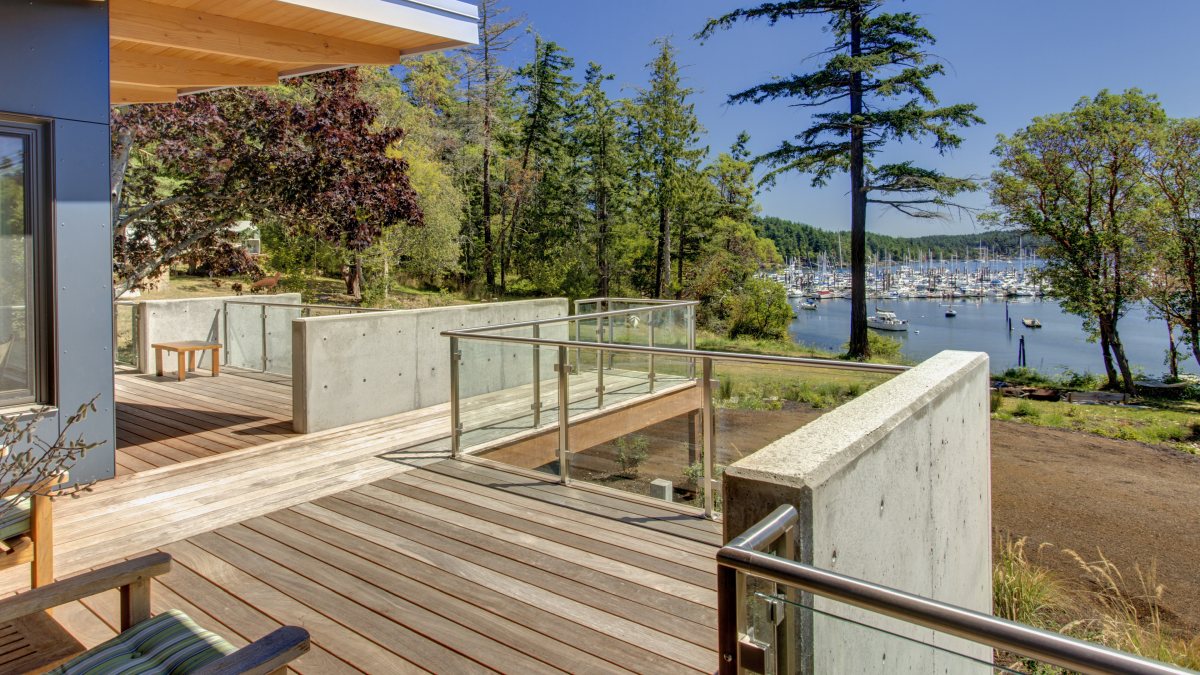
Glass, wire mesh, and other panelized infill systems.

Cascadia

80% prefabricated and built to ship fast, when the schedule will not wait.

All four are fabricated from 316 marine-grade stainless

Building it

Request the builder packet

Spec sheet, engineering summary, and builder program details.

Request the builder packet

Living in it

Start your project

Send us your dimensions and we will design the system and quote it. Or see it first — call ahead and we’ll schedule a factory tour.