
Build Complex Systems
Navigating Challenging Geometry
Most railing projects involve more than just a straight run. When your design includes multi-level decks, varying angles, or structural obstructions, it becomes a “complex system.” This guide explains how AGS Stainless handles technical transitions to ensure your railing remains structural, code-compliant, and visually seamless.
Transitioning Between Levels (The Offset)
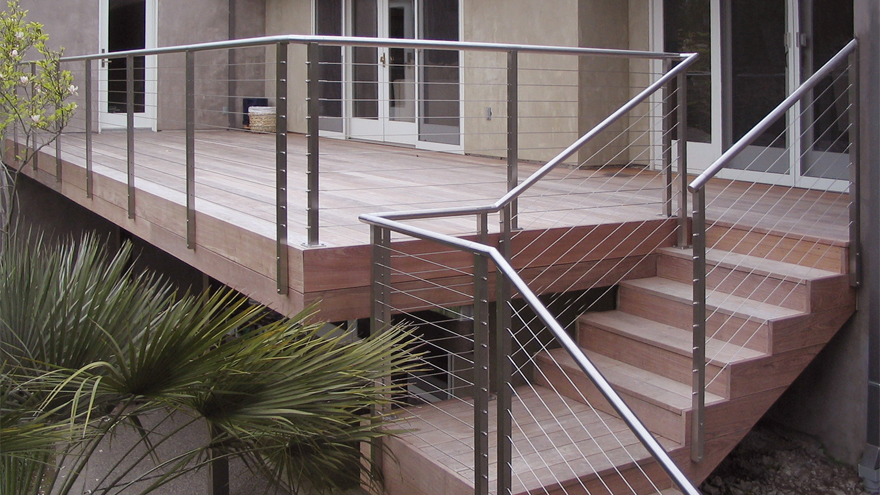
When a railing run moves from a flat balcony to a descending staircase, the geometry changes instantly.
- Challenge: Maintaining the “Continuous Handrail” code requirement while the height of the mounting surface changes.
- Solution: AGS uses specialized transition hardware and custom-post heights to ensure the top rail maintains a smooth, unbroken line, even as the system “steps down” to a new level.
Managing Curves and Non-90° Angles
Decks with “clipped corners,” hexagonal bump-outs, or curved stone walls require more than standard hardware.
- Single vs. Double Posts: In a 90-degree corner, one post often suffices. In a 45-degree or custom angle, we may design a double-post corner to ensure the cable or bar infill maintains proper tension and spacing.
- Universal Articulating Fittings: For cable systems, we utilize fittings that pivot, allowing the cable to enter the post at the exact angle of your structure without putting “kink” stress on the wire.
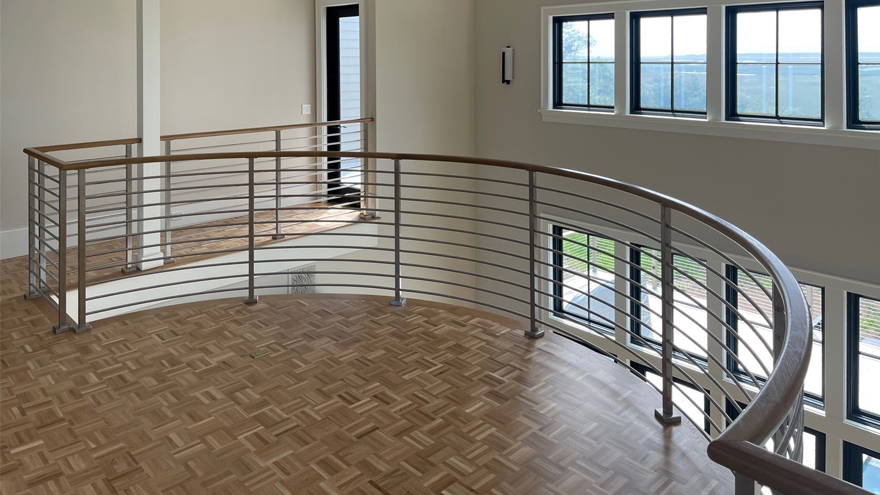
- Factory-Curved Components: Unlike systems that require “segmented” straight sections, AGS can provide factory-curved horizontal rods and handrails to follow the exact radius of your architecture for a smooth, continuous sweep.
Structural Obstructions and Post Placement
Sometimes a structural column or a chimney sits exactly where a railing post “should” be.
- Offset Mounting: We can design custom brackets that allow a post to be mounted 2–4 inches away from its center point to bypass an obstruction.
- Wall-to-Post Transitions: If a railing terminates into a stone pillar or siding, we provide specialized wall-mount flanges that mirror the aesthetic of your posts, ensuring the system looks integrated into the house rather than “added on.”
Long-Run Tension Management
On runs exceeding 30—50 feet, “cumulative tension” becomes a factor, especially in cable railing.
- Intermediate vs. Terminal Posts: We identify which posts are “pass-through” (weight-bearing only) and which are “terminal” (tension-bearing).
- Tensioning Strategy: In complex systems, we strategically place “double-end tensioners” in the middle of long runs to allow you to tighten the system from both directions, preventing post-lean and cable sag.
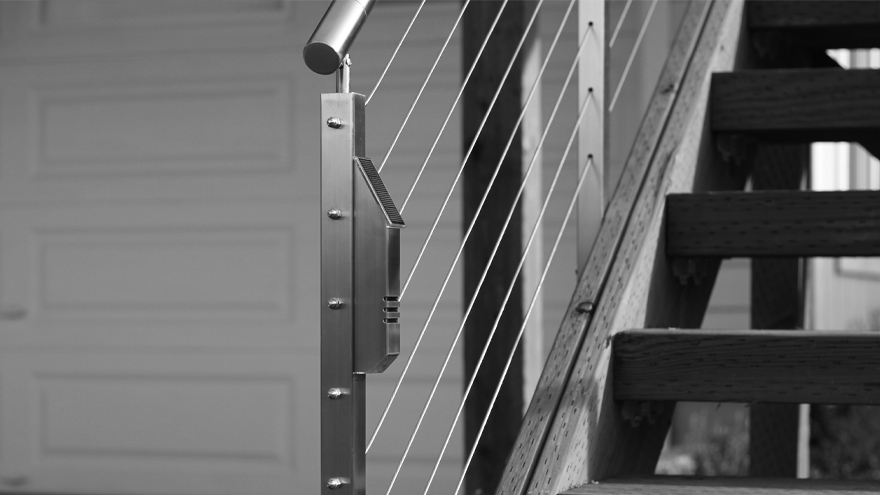
Precise planning leads to precise performance. To help achieve a seamless fit and installation for your railing project, it’s important to consider these data points when measuring or making decisions about your railing needs.
Technical Checklist:
Measuring for Complex Geometry
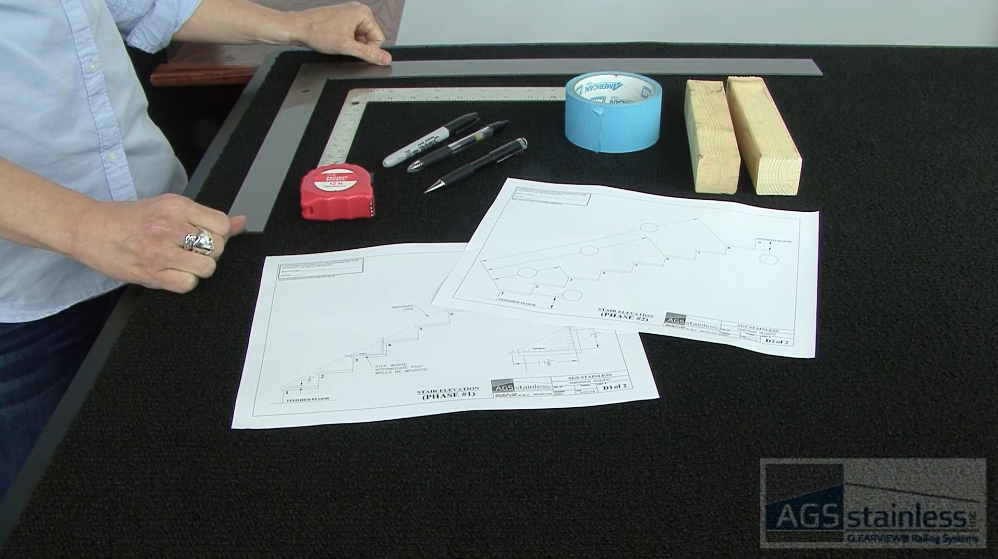
Take note of these data points for every “non-standard” transition.
- The “Clipped Corner” Degree
Do not assume a corner is exactly 45°. Use a digital angle finder to provide the actual degree of the turn. Even a 2° variance can affect how a continuous top rail aligns. - Radius for Curved Sections
If your project involves a curved balcony or patio, provide the radius or a physical template so we can factory-curve your rods and handrails. - Riser-to-Balcony Offset
When moving from a flat balcony to a staircase, measure the horizontal distance from the last “top mount” post on the deck to the first “stair mount” post. This determines the length of the transition rail. - Obstruction Clearance
If a post must bypass a pillar or chimney, measure the distance from the structural mounting point to the edge of the obstruction. This allows us to calculate the necessary “offset” for your mounting brackets. - Tension Run Lengths
Identify any straight run of cable or bar exceeding 30 feet. These sections may require Double-End Tensioners or mid-span structural supports to prevent infill deflection. - Substrate Transitions
Note if your system moves from one material to another (e.g., from a wood deck to a concrete step). This requires a “Mixed Mount” post—one with a base plate for wood and one designed for a core drill or concrete anchor.
Our Awards







Find Us In: