
Frequently Asked Questions: Installation
Everything you need to know about our materials, engineering, and getting your project started.
Rainier Cable Railing
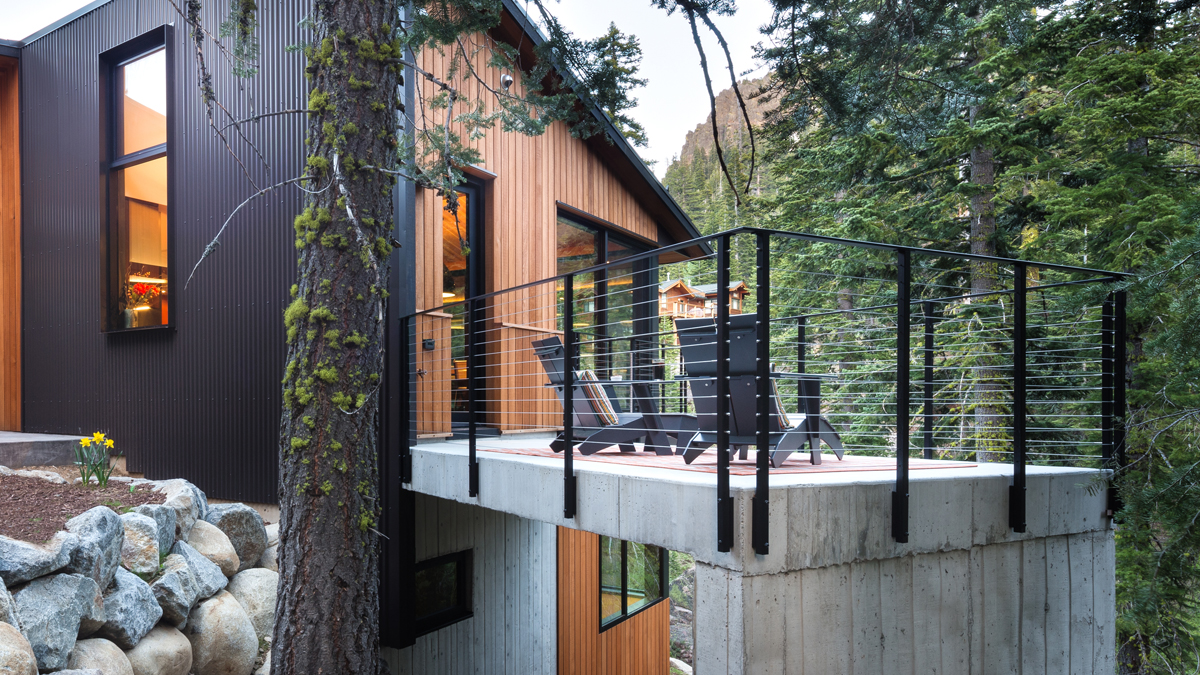
Yes. When properly tensioned, cable is incredibly secure. Because our systems are pre-fabricated, the hole spacing is factory-drilled to ensure you meet the “4-inch sphere” safety rule. As long as you follow our straightforward tensioning instructions, the cables will remain rigid and safe for years.
The initial investment for a cable system is higher than pressure-treated lumber. However, because we use 316 Marine Grade Stainless Steel, your railing won’t rot, warp, or require constant staining. Over the long run, Stainless Steel saves a massive amount of time and money on long-term maintenance.
For the best structural performance, we recommend a maximum of 4 feet between posts. This “sweet spot” for our pre-drilled systems keeps cables taut and prevents sagging without adding unnecessary hardware costs.
We precision-drill our posts at 3-1/8″ on center to guarantee code compliance. This ensures that even with the slight natural “give” of a cable, a 4-inch object cannot be pushed through.
We typically recommend 1/8″ diameter cable for residential DIY projects. It’s nearly invisible but uses the same 316 Marine Grade strength found in high-end sailboats. For heavy-duty commercial looks, 3/16″ is also an option.
Glacier Glass Railing
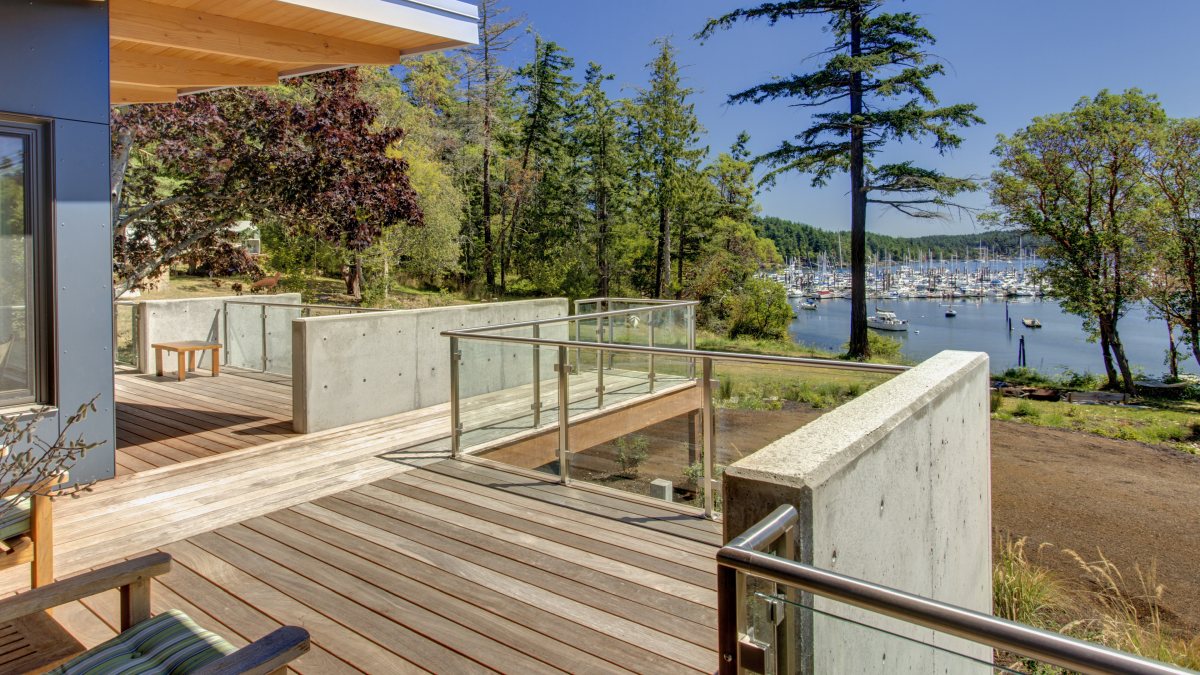
It is one of the safest options available. A glass barrier is climb-resistant and has no gaps for small objects to fall through. Because our systems are engineered and pre-fabricated, the panels fit perfectly into the hardware for a rock-solid barrier.
as its structural rigidity minimizes “flex” or vibration if the handrail is leaned upon. Tempered glass generally meets or exceeds local residential load requirements and has a high-end aesthetic that aligns with stainless steel hardware.
Laminated Glass is typically reserved for commercial applications, frameless systems, or specific “overhead” environments. It consists of two glass layers with a clear interlayer that holds fragments in place if a break occurs.
In most cases, yes. A top rail provides a continuous “cap” for stability. Because our components are 316 Marine Grade Stainless, the rail adds a sleek finish that won’t rust or tea-stain over time.
Installation & DIY Support
The Clearview® railing system is designed for a straightforward DIY installation. If you have basic construction knowledge and are comfortable with common power tools, you can achieve a professional result.
No. There is no welding or field cutting required. Every component is pre-cut and pre-drilled in our factory to your project’s exact specifications.
Standard cutters “crush” the cable, causing fraying. AGS Cable Cutters use a specialized bypass shear design that creates a clean end, essential for sliding the cable into our precision fittings.
We custom-fabricate your stair components based on your specific pitch and run. Your kit arrives ready to bolt down with no onsite modifications necessary.
Mounting & Structural Selection
Absolutely. It is very common to use Top Mounts for a main deck and Side (Fascia) Mounts for stairs to maximize the walkable width.
We almost always recommend Side (Fascia) Mounts. Mounting to the side of the rim joist prevents you from puncturing the waterproof roof membrane, protecting your warranty.
When top-mounting, we recommend using AGS Base Plate Gaskets and high-grade sealants to ensure moisture cannot penetrate the mounting holes.
Yes. This requires specialized masonry fasteners like Stainless Steel Wedge Anchors. You will need a hammer drill and a masonry bit. We recommend drilling the holes 1/2″ deeper than the anchor for a secure grip.
Stair Railing & Transitions
The Guardrail is the entire structural barrier preventing a fall. The Handrail is the specific graspable support required on stairs (typically 34″—38″ high). In many residential designs, the top rail of the guard serves as the handrail, provided it meets “graspability” codes.
AGS uses custom-engineered Goosenecks and Transitions. These factory-fit components allow the handrail to remain continuous and at a code-compliant height even as the pitch of the stairs changes, ensuring there are no breaks in your support.
No. Typically, posts are placed at the top and bottom of a flight and at landings. Intermediate posts are generally spaced every 3—4 feet to maintain structural integrity and meet the 200-lb load requirement without cluttering your steps.
Building codes require that the spacing between your cables or glass panels be tight enough that a 4-inch sphere cannot pass through. However, there is a specific exception for stairs: a 6-inch sphere limit is allowed for the triangular gap created by the step tread, the riser, and the bottom rail.
Coastal & Balcony Engineering
Yes. For coastal areas, we exclusively recommend Electropolished 316 Stainless Steel. This process smooths the metal at a microscopic level, removing surface contaminants and making it significantly more resistant to the “tea staining” caused by salt air.
Top Mounting is standard, but Fascia (Side) Mounting is often the “gold standard” for balconies. By moving the posts to the outside of the rim joist, you maximize your walkable square footage and keep the balcony floor completely clear of post bases.
While residential codes (IRC) often allow 36 inches, the standard for balconies—especially in multi-family or high-altitude settings (IBC)—is typically 42 inches. Since we pre-fabricate your posts, we will confirm the specific height required for your jurisdiction during the CAD phase.
When top-mounting on a finished balcony, we provide AGS Base Plate Gaskets. When used with high-grade sealants, these ensure moisture cannot penetrate the mounting holes and damage the underlying wooden or concrete structure.
Yes. Our systems are engineered to withstand significant wind loads. The combination of 316 Marine Grade Stainless Steel and precision tensioning ensures the system remains rigid and safe even in high-exposure environments.
Complex Systems & Custom Engineering
While we don’t “bend” stainless steel on-site, we use a Segmented Curve approach. By using a series of short, straight sections that follow the radius of your deck, we create a faceted, high-end look that matches your CAD drawings perfectly.
No. Because we do the math at the factory, your kit arrives with the correct angles already machined into the posts. You simply bolt them down according to your custom layout map provided by our design team.
Yes. AGS systems are engineered to withstand significant wind loads. Our 316 Marine Grade Stainless Steel is specifically chosen for its structural integrity in high-exposure environments.
Mixing Railing & Infill Types
Absolutely. Many homeowners choose Glacier (Glass) for the balcony to act as a windbreak while using Rainier (Cable) on the stairs for an open feel. Because we use consistent 316 Stainless posts, the transition is aesthetically seamless.
AGS provides consistent Top Rail profiles (Round or Square) across all systems. The finish and diameter of the stainless steel remain identical, ensuring a unified look throughout the home.
All Clearview® Railing Systems are made from high-grade 316 Stainless Steel, so maintenance for these components is identical. If you have Glacier Glass Panels, you may need to clean the glass if you see smudges.
For more help with maintenance, see Maintenance and Care.