
Maintain and Care for Your Stainless Steel
With proper care, 316-grade stainless steel maintains its architectural beauty and structural integrity for decades. This comprehensive guide provides the instructions needed to keep your system clean, vibrant, and protected against the elements. While stainless steel is naturally corrosion-resistant, regular maintenance prevents surface contaminants from causing tea staining or pitting, ensuring your railing remains a long-lasting centerpiece of your home.
Maintenance Essentials
- Chloride-free Cleaner (pH-neutral)
- Non-abrasive Microfiber Cloths
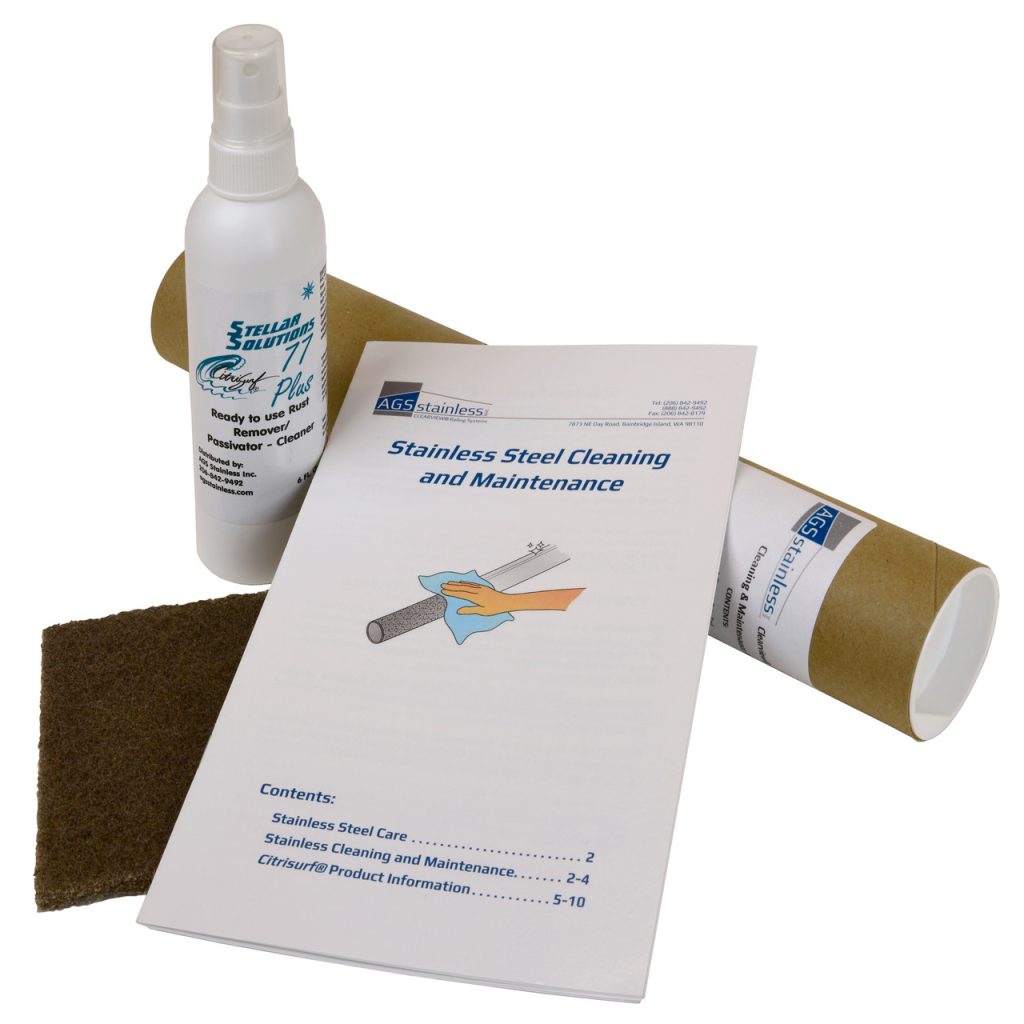
- Scotch-Brite™ Pads (Stainless Steel-safe only)
- CitriSurf® 77 Plus (For Passivation)
- Carnauba Wax (For marine environments)
- Tensioning Tools (if you have a Cable Railing System)
Best Practices for Cleaning and Care
Regular upkeep prevents environmental pollutants from compromising your stainless steel’s surface. A key part of this process is passivation—treating the surface of stainless steel to help it resist rust and damage from salt and pollutants.
Follow these guidelines to ensure the longevity, beauty and durability of your stainless steel railing system.
Passivate Immediately After InstallingTo bring your new railing to its optimal condition, we recommend that you clean and passivate it with the CitriSurf® 77 Solution included in the AGS Stainless Steel Cleaning & Maintenance Kit we send with most railing systems. You can find step-by-step guidance on how to passivate your railing below.
Like any stainless steel appliance, your railing benefits from regular cleaning. Household cleaners Windex, 409 or even plain warm water and soap, will remove smudges and fingerprints.. Ensure that your cleaner does not contain chlorides. (See more on Harmful Materials below.) Use AGS Stainless Steel Cleaner or find stainless steel-specific products at most hardware and big box stores.
Use a coarse Scotch-Brite™ pad. Note the direction of the grain of the stainless steel. Scrub in the direction of the grain until and scrub in the direction of until the mark is removed. Wipe the area down with a cleaner and soft cloth to bring out the shine.
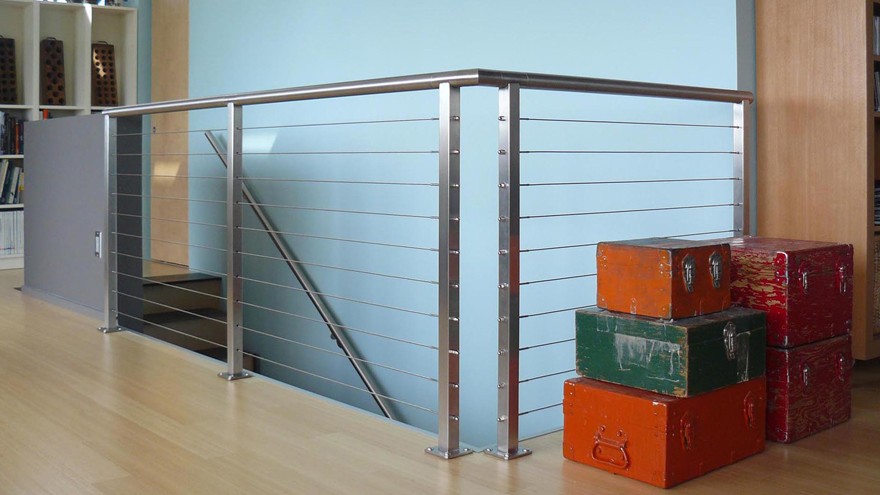
Stainless can be more vulnerable in areas with higher levels of air-borne contaminants – such as marine environments or near pools. Corrosion is rare but can happen, even with marine grade 316 stainless steel. Prevent further impacts and pitting by cleaning immediately with CitriSurf® 77 Plus or product specifically formulated to remove rust and repair passivation.
Stainless steel that is exposed to marine environments or pools can be protected by applying a wax such as Carnauba cream, paste, or spray, which can be found at your local Automotive or Hardware store.
To give your stainless steel a passivation treatment, apply CitriSurf® 77 Plus to deep-clean the steel and restore its natural protective oxide layer.
Your long-term maintenance of your stainless steel railing should include periodic treatments to passivate your railing. Remember to rinse the stainless steel surface with clean water after treatments to remove chlorides.
Stick to products specifically formulated for stainless steel and the care techniques recommended by AGS.
See our Harmful Materials section below for a list of what to avoid so that you can keep your railing looking shiny and new for years to come.
What is Passivation?
Passivation is a critical chemical process that restores the invisible, protective “passive” layer inherent to high-quality stainless steel. While 316-grade stainless is naturally corrosion-resistant, its protective oxide film can be disrupted by fabrication, installation, or environmental pollutants. By applying a specialized citric acid-based solution (like CitriSurf® 77 Plus), you deep-clean the pores of the metal and accelerate the restoration of this oxide layer. Once passivated, the stainless steel becomes “passive” rather than reactive, enabling it to chemically resist rust, salt air, and airborne contaminants.
How to Clean and Passivate
Regular upkeep prevents environmental pollutants from compromising your railing’s stainless steel surface. Follow our step-by-step guide to get the job done, and keep the shine!
- Rub Along the Finish with the non-abrasive Scotch-Brite™ pad included in your kit to address surface marks. Rub posts linearly in the direction of the grain. Rub top rails in a circular motion. Never use steel wool or steel brushes, as they’ll contaminate the surface, leaving permanent scratches.
- Apply CitriSurf® 77 (Passivation Solution) sparingly to a clean towel or spray directly onto the steel. Wipe any discolored areas to recondition the surface and initiate restoration of the protective oxide film.
- Wait for 10-30 Minutes to allow the solution to penetrate the steel. If the surface is in direct sunlight or a hot environment, mist with water periodically to prevent solution from drying. Skipping this dwell time may require multiple applications for full passivation.
- Remove Solution & Rinse with fresh water to remove all chemical residue. Immediately wipe the entire system dry with a clean towel, moving in the direction of the brushed finish. You can also use a hot air blower to accelerate drying in hard-to-reach joints.
- Apply Stainless Steel Cleaner to a clean towel sparingly and wipe in the direction of the finish. This final step restores a protective layer in the intergranular crevices, providing a secondary defense against chlorides and corrosion.
Harmful Materials
Stainless steel can maintain a long, blemish-free finish for decades if you properly care for it. To ensure your railing’s longevity and beauty, never use the following materials:
- Chlorides & Bleach: Avoid chlorine or chloride-based cleaners, hypochlorite bleaches, silver cleaners, and scouring powders. These common household chemicals disrupt the protective oxide layer and cause rapid surface corrosion.
- Abrasives: Do not use steel wool, sandpaper, wire brushes, or abrasive cleaning pads. These materials scratch the finish and introduce iron particles that “seed” rust into the stainless steel.
- Construction Acids: Muriatic or Hydrochloric acids—frequently used to clean nearby tile, stone, or masonry—will cause immediate and severe damage to the railing’s surface.
- Hard Scrapers: Avoid metal knives, putty scrapers, or any cleaning pads that have been previously used on rusted steel or carbon steel.
Note on Nearby Construction or Cleaning: If you use any of these chemicals to clean tile, stone, or concrete near the railing, ensure the stainless steel is protected. Always rinse the railing thoroughly with fresh water immediately afterward to remove any airborne or splash residue.
Cable Tensioning
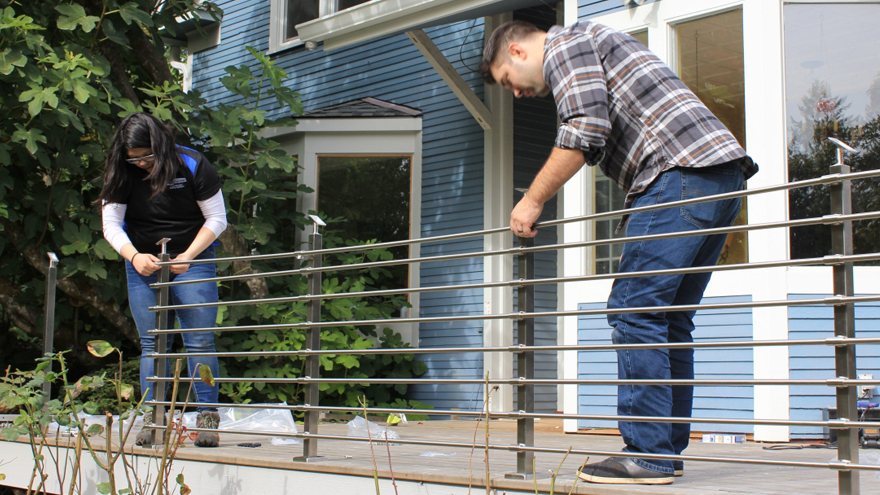
Cables may require periodic adjustment to eliminate sag. Use original installation tools to tighten fittings until taut. Avoid over-tensioning beyond what is necessary to remove visible slack.
Our Awards







Find Us In: